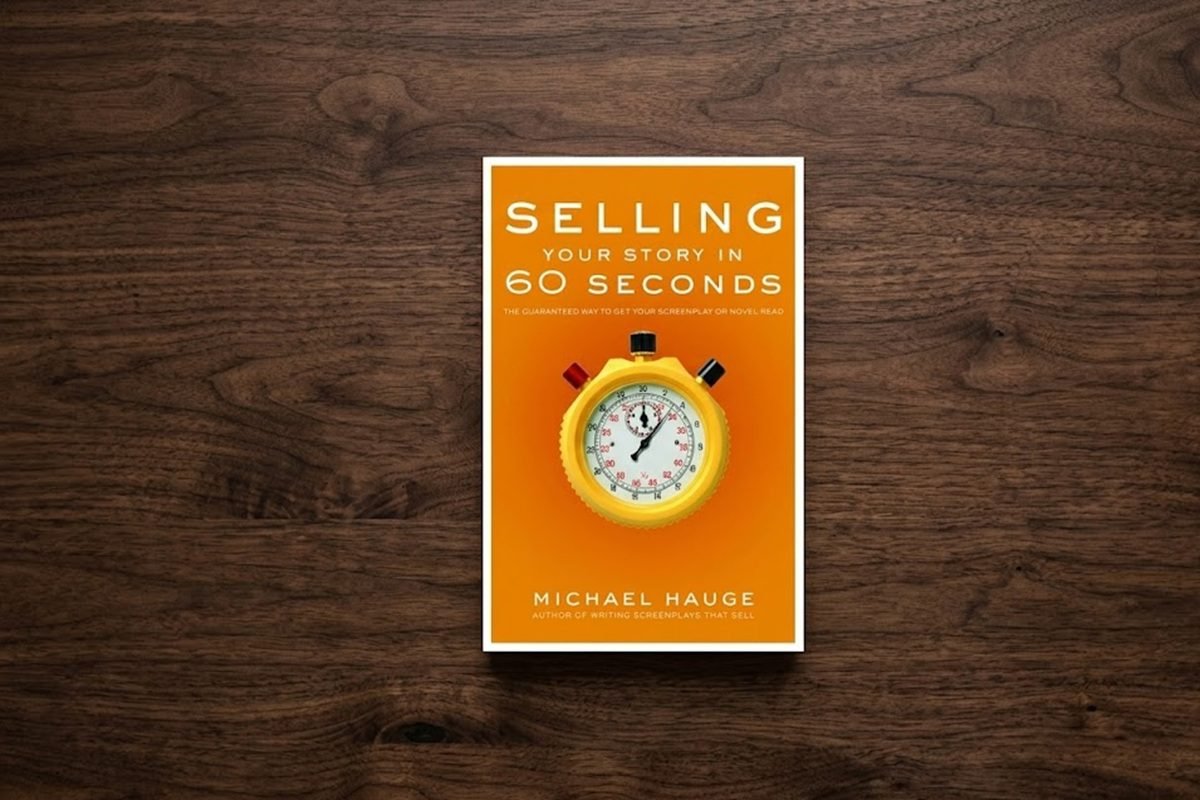
Book review: Selling Your Story in 60 Seconds
The Guaranteed Way to Get Your Screenplay or Novel Read
By Michael Hauge
Genres:
- Screenwriting
- Storytelling
- Marketing
The year it was published:
2006
Number of pages:
186

As an Amazon Associate, I earn from qualifying purchases.
Table of contents:
Introduction
Part I – Preparation
Chapter 1: The 10 Key Components of a Commercial Story
Chapter 2: Designing Your Pitch
Chapter 3: Practice
Chapter 4: Targeting Your Buyers
Chapter 5: Putting the Tools to Work
Chapter 6: Securing Opportunities to Pitch
Part II – Presentation
Chapter 7: Gearing Up
Chapter 8: Establishing Rapport
Chapter 9: Revelation, Request, and Response
Chapter 10: Beyond the 60-Second Pitch
Part III – Extra Stuff
Chapter 11: The Pitching Templates
Chapter 12: Executives on Pitching
Chapter 13: The Best Pitch You’ll Ever Give
Thoughts about the book:
At its core, Selling Your Story in 60 Seconds is about clarity and emotional connection. Hauge argues that whether you are pitching yourself, a business idea, a product, or even a screenplay, success depends less on information and more on the emotional impact of your message. The challenge is not merely to explain what you do, but to communicate it in a way that instantly engages attention and creates interest. What I liked most about the book is its simplicity and focus. Hauge strips storytelling down to its essential persuasive elements and adapts them into concise, practical frameworks. He understands that in many real-world situations, networking events, meetings, interviews, pitches, you have very little time to make an impression. The book provides useful tools for structuring short, compelling narratives that feel human rather than overly rehearsed. The language is everyday and direct, avoiding academic terminology or heavy business jargon. This makes the book approachable for a broad audience, from entrepreneurs to creatives to professionals simply trying to communicate more effectively. I liked how ideas are broken into manageable sections, and the examples help reinforce the concepts quickly. It is the kind of book that readers can finish in a short time and immediately begin applying. Hauge’s insights come primarily from experience in storytelling, branding, and communication rather than formal psychological or behavioral research. While many of the principles align with persuasive communication theory, the book is grounded more in practical observation than in empirical evidence. Readers already familiar with storytelling or branding may find some concepts familiar.
Who should read this book:
If you are someone who feels that your ideas, work, or talent are not being recognized quickly enough in a world that moves at speed, then Selling Your Story in 60 Seconds by Michael Hauge is a book that speaks directly to that challenge. This is a book for readers who are searching for clarity, impact, and immediate connection. It is especially relevant for those interested in storytelling, pitching, branding, networking, or personal development, but who struggle with how to express their value in a way that is both concise and compelling. It is for anyone who knows what they do matters, but cannot always get their value across to others. Hauge is searching for the essence of persuasive storytelling stripped down to its most powerful form. His interest lies in how to compress identity, purpose, and value into a short narrative that immediately engages attention. He explores how human beings are wired to respond to stories, not summaries, and how the right structure can transform a brief introduction into a lasting impression. What this book will help you do is refine how you present yourself and your ideas in moments that matter. It teaches you how to craft a “60-second story” that communicates not just what you do, but why it matters and why you are the right person to listen to. For anyone who wants to be understood quickly, remembered clearly, and taken seriously immediately, this book offers a practical and powerful framework for turning attention into opportunity.
Summary of the book:
Introduction
Selling a story is not just about writing something good, it’s about getting the right people to actually read it. Even a great screenplay or novel can go unnoticed if agents, producers, or editors never open it. This chapter focuses on how to solve that problem through what Hauge calls the 60-second pitch. A 60-second pitch is a short, focused version of your story used in quick interactions like phone calls, conferences, or chance meetings. It is not meant to explain the entire plot. One of the biggest mistakes writers make is trying to summarize everything that happens in their story. That approach usually fails because it overwhelms the listener and leaves no room for curiosity or emotional engagement. Instead, the goal is to spark interest and make the listener want to read more, much like a movie trailer that shows just enough to create excitement without revealing everything. At the heart of a good pitch is emotion. Stories exist to make people feel something, so the pitch should give a glimpse of that emotional experience rather than a detailed summary of events. If the listener feels intrigued or moved, they are more likely to ask for the full script or manuscript. The chapter also outlines a practical structure for pitching, called the 8 R’s. It begins with reviewing your story to identify its strongest emotional elements and researching the people you are pitching to. Then comes reaching out through networking or direct contact, followed by building rapport quickly when you get the opportunity to speak. The next step is revelation, where you deliver your short, emotional pitch. After that, you make a clear request for the buyer to read your work, respond to their reaction, and finally show resilience by continuing to pitch even after rejection. Together, these steps emphasize that success in storytelling is not only about the story itself, but about how effectively you communicate its emotional core in a short amount of time.
Chapter 1: The 10 Key Components of a Commercial Story
Before pitching a story, it is important to understand what makes stories work. Hauge identifies 10 key elements common in successful commercial stories, though not all need equal emphasis in a pitch. The most important is the hero, the central character audiences follow and root for. Empathy makes the audience care about the hero and can be created by showing them as sympathetic, likable, funny, skilled, or in danger. Strong stories often combine several of these traits quickly. The setup establishes the hero’s normal life and what is at stake before change occurs. The opportunity is the event that disrupts that life and launches the story. The outer motivation is the hero’s clear external goal, such as winning, escaping, stopping a threat, or finding something valuable, giving audiences something concrete to root for. Conflict creates tension by placing obstacles in the hero’s path, while the character arc shows the hero’s internal transformation, often from fear or limitation toward growth or self-understanding. Stories may also explore broader themes or social issues that add deeper meaning. Antecedents, meaning successful stories similar to yours, help buyers quickly understand the genre, tone, and commercial appeal. Passion is also essential, as genuine enthusiasm from the storyteller helps convince others to care. Hauge emphasizes four elements as especially important in any pitch, the hero, the hero’s outer motivation, the conflict, and the writer’s passion. Together, they answer the main questions buyers ask, who the story is about, what they want, what stands in their way, and why the story matters. Examples reinforce these ideas. In King Kong, Ann Darrow quickly gains audience empathy through sympathy, likability, skill, and danger. In Shrek, the emotional core is the hero’s transformation from isolation to love. In Hotel Rwanda, the historical setting supports a universal theme of moral courage over personal safety. Ultimately, strong stories are built not just on events, but on the emotional structure of who we care about, what they want, what stands in their way, and why it matters.
Chapter 2: Designing Your Pitch
Once you understand your story’s key elements, the next step is shaping them into a strong 60-second pitch. The chapter explains that a pitch should not include everything, but instead focus on the elements that best express the emotional core of the story. Action films may emphasize conflict and goals, while dramas may focus more on emotion and character change. Hauge recommends beginning with a brief explanation of how the idea came to you, since this feels natural and shows personal passion. From there, the pitch can transition into a “What if…?” question, which creates curiosity and quickly introduces the premise. Antecedents, or comparisons to familiar stories, can also help listeners understand the genre and tone. The chapter warns against common mistakes such as starting with the title, asking the listener direct questions, revealing the ending too early, or overexplaining the plot. Character names should usually be replaced with simple roles, and the pitch should build tension rather than resolve it. Confidence and genuine enthusiasm are more effective than exaggeration or hype. Examples throughout the chapter demonstrate these techniques. In Cinderella Man, the pitch focuses on emotional resilience rather than historical detail. In Rumor Has It, a single “what if” question clearly communicates the premise. A sample pitch for The Last Mickey Mantle uses personal connection, clear conflict, and emotional stakes to engage the listener. Overall, the chapter argues that a strong pitch is not a full summary of the story, but an emotional preview designed to spark curiosity and make the listener want more.
Chapter 3: Practice
Designing a strong pitch is only half the work. The other half is practicing it until it feels natural, flexible, and unforced. This chapter emphasizes that rehearsal is often the most overlooked step, even though it is what makes the difference between a stiff delivery and a convincing, confident pitch. The main idea is that pitching should feel like acting. Just as actors rehearse their lines until they can respond naturally in the moment, a writer should know their pitch so well that they can stay relaxed and emotionally connected even under pressure. The goal is not to memorize a script, but to internalize the story so deeply that it can be told conversationally, even if you are interrupted or nervous. To build that level of familiarity, Hauge recommends several practical techniques. Recording yourself is one of the most useful, since it helps you hear issues like rushed pacing or unclear transitions that are hard to notice in real time. Timing the pitch is also essential, since it must stay within 60 seconds, and cutting unnecessary parts is often required to meet that limit. He also suggests using notes as a backup, but never reading directly from them, since that immediately removes energy and authenticity from the delivery. Practicing in more challenging conditions, such as pitching to two people instead of one, helps make real situations feel easier by comparison. Role-playing is another useful method, where a rehearsal partner acts as a specific industry contact so you can practice both the pitch and the initial rapport. Finally, you should practice handling questions. After delivering the pitch, the listener should ask anything they want about the story, and you should be able to respond clearly and briefly. This ensures you understand your own material deeply enough to stay confident in any conversation that follows. Overall, the chapter makes a simple point, a great pitch is not just written, it is performed. Rehearsal is what transforms it from something prepared into something believable and compelling.
Chapter 4: Targeting Your Buyers
Not everyone is the right audience for your pitch. A comedy writer approaching a horror production company, for example, is unlikely to succeed and is wasting time on both sides. This chapter focuses on how to identify the people who are actually likely to be interested in your story and how to find a way to reach them. The process begins with understanding where to look. One of the most valuable sources is personal connections and referrals, since even a secondhand introduction carries far more weight than a cold approach. Industry professionals also reveal useful information through interviews, panels, and festival appearances, where they often describe what kinds of stories they are actively looking for. Trade publications like Variety, The Hollywood Reporter, and Publishers Weekly provide insight into what is being bought, which projects are moving forward, and which companies are active in specific genres. Tools like IMDb and IMDbPro allow writers to trace similar films back to their producers, agents, and companies. Databases such as Done Deal Pro go even further by tracking script sales and allowing writers to search by genre to see exactly who has been buying comparable material. Other useful resources include the Hollywood Creative Directory, which lists production companies and contacts, and The Writer’s Market, which serves a similar purpose for books and publishing. Even informal research, such as browsing films or books in the same genre on streaming platforms or in stores, can help identify creators and companies behind similar work. Pitch festival participant lists are also valuable because they show who is actively seeking new material. The key insight of the chapter is that research should begin early, not after the script is finished. Writers are encouraged to start identifying potential buyers as soon as they have a concept. If no companies or professionals can be found who have recently worked on something similar, it may be a sign that the idea is not commercially viable or not positioned correctly for the market.
Chapter 5: Putting the Tools to Work
This chapter turns all your earlier research into a practical, organized plan for approaching the right people. Hauge calls this your “Hit List”, a focused list of buyers who are most likely to respond to your specific story. The key idea is that you should not just target companies, but specific individuals within them. At production companies, the main target is the development executive, who is responsible for finding and evaluating scripts. In publishing, it is editors, and in agencies, it is agents or the assistants and story editors who often act as the first gatekeepers. Assistants are especially important because they frequently read incoming material first and can strongly influence what gets passed along. The chapter then lays out a step-by-step process for building this list. It begins once your story is far enough developed that you can summarize it in a short pitch or logline, which you then start sharing with trusted contacts to gather feedback and potential leads. From there, you ask your network for suggestions about similar successful stories and who might have worked on them. You expand this by researching recent reviews, industry publications, and databases like IMDb, Amazon, Netflix, and Publishers Weekly to find comparable titles in your genre. Next, you trace those projects back to the people behind them, the agents, managers, producers, and companies involved. Once you identify them, you use directories and online resources to find contact details. If information is missing, you move up the chain by calling company switchboards, Writers Guild resources, or publishers to locate the right person. Finally, the chapter emphasizes that research should go beyond just finding names. You should also study each buyer’s past projects to understand their preferences and taste. This not only helps you decide who to approach, but also gives you material for building rapport when you eventually reach out. Overall, the Hit List is about narrowing your focus from “everyone in the industry” to a small, carefully chosen group of individuals who are actively working on material like yours and are most likely to respond positively.
Chapter 6: Securing Opportunities to Pitch
Once you have both a pitch and a hit list, the next challenge is getting your story in front of the right people. This chapter tackles the idea that breaking in is “impossible” and argues instead that there are real, practical ways to reach buyers if you know where to look and how to approach them. Hauge directly challenges the common belief that you cannot get an agent without selling something first, and you cannot sell something without an agent. He calls this a myth. If that were true, no new writers would ever enter the industry. In reality, every agent and executive who regularly reads scripts is doing so because new writers are constantly finding ways to get their work in front of them. The most effective method is referrals. A recommendation from someone the buyer already knows instantly gives your pitch credibility and helps it stand out. Even a simple “so-and-so suggested I contact you” can open doors, as long as it is used honestly and with permission. Pitch festivals are another option. They allow writers to meet many buyers in a short time, though they require preparation and can be expensive. While not every attendee has decision-making power, even assistants or junior readers can pass material up the chain if they respond positively. Conferences and book fairs also create opportunities for direct contact. Writers can meet industry professionals during scheduled sessions, and more importantly, follow up afterward using attendee lists, since those companies have already shown interest in new material. Query letters remain a common but limited tool. They are short, personalized emails or letters that introduce the writer and summarize the story in a focused, emotionally engaging way. Most are ignored, but a strong one, especially when followed by a phone call, can still lead to a reading request. Hauge also encourages more direct approaches, including phone calls, even though writers are often told not to use them. He argues that if you have researched the right person and believe your story fits their needs, a polite and professional call is appropriate. The key is to be clear, respectful, and prepared to briefly explain why you are contacting them specifically. Other opportunities include chance encounters at events, parties, or even elevators, which is why having a short and clear pitch ready at all times is important. Writing competitions can also help, especially if you place highly, since awards add credibility and can be mentioned in all future outreach. The chapter also breaks down a simple structure for query letters. It should begin with a personal reason for contacting that specific buyer, followed by a brief introduction of the writer’s relevant background. Then comes the title and genre, followed by a concise story summary that clearly shows the hero, their goal, the conflict, and the emotional stakes. The letter should end with a promise to follow up, which the writer must actually do. To illustrate, the chapter includes a sample query for The Last Mickey Mantle. In just a few sentences, it introduces a young boy as the hero, explains his emotional motivation to help his dying father, establishes the journey to find a rare baseball card, and hints at the conflict with a con artist who may exploit him. This shows how a well-crafted query can communicate the essence of a story quickly while still creating emotional interest.
Chapter 7: Gearing Up
This chapter focuses on everything that happens before the pitch itself, the practical preparation that helps you show up professionally and confidently when you meet buyers or make contact. One of the first steps is protecting your work. Before pitching, writers are encouraged to register their screenplay or manuscript for copyright and, for screenwriters, with the Writers Guild of America. While some professionals argue this isn’t strictly necessary, Hauge recommends it both for legal protection and as a psychological milestone that marks the shift from creating the story to selling it. The chapter then addresses presentation. In Hollywood, the environment is generally casual, so formal business attire can feel out of place at pitch sessions. The goal is to look clean, comfortable, and professional without appearing overly rehearsed or trying too hard. The same applies in publishing, where dress is slightly more formal but still relaxed. The main principle is simple, nothing about your appearance should distract from your story. Hauge also discusses what to bring into a pitch. Props are generally discouraged in short pitches because they can distract from the emotional focus of the story unless they have been carefully tested and genuinely enhance the presentation. Business cards are useful, but should not be overused. A strong follow-up message is more memorable than a card handed out casually. Similarly, written synopses are often unnecessary and can even weaken a pitch. Instead, he suggests confidently offering the opening pages of the script, framing it as the best way to judge the story. Finally, the chapter deals with nerves. Feeling nervous is completely normal, and Hauge emphasizes that buyers are not concerned with minor signs of anxiety like shaking or stumbling. What matters is the story itself. The best way to manage nerves is not to try to eliminate them, but to shift focus toward genuine enthusiasm for the material. When a writer is focused on passion for the story, fear tends to fade into the background. Overall, the chapter reinforces that preparation is not just about the pitch content, but about creating the right mindset, presentation, and professionalism so that the story can take center stage.
Chapter 8: Establishing Rapport
Before you even start talking about your story, you need to create a brief human connection with the buyer. This isn’t casual small talk for its own sake, but a purposeful way of shifting the interaction from “transaction” to “conversation.” Hauge stresses this because it often shapes how the rest of the pitch is received. The reason rapport matters is simple, people respond better to people they feel some connection with. If the buyer sees you as just another writer in a long line of pitches, they are more likely to stay detached. But if they see you as an individual with something in common or something sincerely appreciated, they are more likely to listen with interest. One way to do this is through shared experience. If you happen to know something the buyer has done or experienced, you can briefly connect it to your own background. Even something as simple as recognizing that they spent time working in a similar role or acknowledging that they’ve made the same kind of career journey can create an immediate sense of familiarity. When you don’t have personal overlap, even a basic acknowledgment of the event you’re both attending can serve the same purpose. Another approach is acknowledgment, which means sincerely recognizing something specific about the buyer’s work or reputation. The key is specificity. Instead of general praise, you focus on a particular film, project, or comment and explain why it mattered to you personally. This turns a standard compliment into something more meaningful and memorable. The chapter illustrates this with examples. In one case, a writer speaking to an executive at a major production company goes beyond simply praising a famous film and instead shares a personal story connected to it, how watching the film led to an unexpected conversation with a family member and revealed something meaningful about their past. Even though the executive was not involved in making the film, the emotional specificity of the response creates a genuine moment of connection. Referrals can also be used as instant rapport. If someone the buyer knows has introduced you, you can begin by referencing that connection directly in a light, human way. This immediately shifts the tone of the interaction and signals that there is already a trusted link between you. Overall, the chapter shows that building rapport is not about impressing the buyer, but about briefly stepping out of “pitch mode” and into a real human exchange. That small shift in tone can make the difference between being heard and being overlooked.
Chapter 9: Revelation, Request, and Response
This chapter is where everything comes together, the actual delivery of the pitch. Hauge breaks the encounter into three parts, telling the story, asking for a response, and reacting to whatever the buyer says. After building rapport, the transition into the pitch can feel awkward, but Hauge argues you should not wait for permission. Instead, you take control. After a brief pause, you move directly into your prepared opening, such as explaining how you came up with the idea. The point is to show confidence and respect for the buyer’s time by guiding the conversation rather than hesitating. Once the pitch is delivered, you end with your final story beat or logline, then pause briefly and ask a simple closing question, whether they have any questions or would like you to send a copy. This question is effective because it gives the buyer two comfortable options, both of which move things forward. It also prevents the uncomfortable silence that often follows a pitch, when neither person knows how to respond. If the buyer says yes, the key is to stop talking. Over-explaining at this point can weaken their interest. You simply confirm next steps, send the material, and follow up appropriately to ensure it was received. If the answer is no, you remain polite and professional. You thank them, ask if they know anyone else who might be a better fit, and leave the door open for future contact. A rejection handled well can still lead to useful connections or later opportunities. If the buyer asks questions, it is generally a positive sign. The best approach is to answer briefly and clearly, usually in no more than a few seconds, since long explanations can dilute focus. If the question is really a suggestion, you don’t need to defend your story, instead, you explore the idea openly and show that you are collaborative and easy to work with. The chapter highlights a common failure point, the silence after a pitch ends. Many writers stop confidently telling their story but then lose momentum at the finish, creating an awkward pause that undermines the impression they just made. The simple closing question prevents this by giving the interaction a natural next step and keeping control of the flow. Overall, the message is that a successful pitch is not just about the story itself, but about managing the conversation, leading it clearly, ending it confidently, and responding calmly no matter what happens next.
Chapter 10: Beyond the 60-Second Pitch
This chapter looks at how the 60-second pitch can be adapted for different situations, from casual conversations to formal meetings and even pitching other people’s work. The simplest version is the 10-second pitch, used when someone casually asks what your story is about. In these moments, people are not looking for detail, they want a quick, interesting idea. Hauge suggests focusing on four things, the hero, what they want, what stands in their way, and one element that makes the story distinctive. The delivery is informal and quick, usually starting with something like a general observation about the type of story before landing on the hook. The goal is not to explain everything, but to spark curiosity. In a full pitch meeting, which can last anywhere from 15 to 45 minutes, the same principles apply but with more structure. Hauge recommends beginning with the 60-second pitch to set the frame, then expanding on the major story beats rather than trying to describe every detail. It helps to signal where you are in the structure as you go, so the listener can follow the shape of the story. The focus remains on the big emotional turns rather than scene-by-scene explanation, since the buyer’s job is to evaluate the concept, not experience the entire script in real time. Pitching for television adds different demands. A successful series needs a setting that naturally produces ongoing conflict, characters strong enough to sustain long-term interest, and emotional stakes that can support many episodes. It also requires clear comparisons to existing shows so buyers can quickly understand where it fits in the market. The pilot is especially important, since it has to establish both the premise and the emotional connection to the characters. When pitching material you didn’t write yourself, such as in a producing or executive role, the approach shifts slightly. Instead of explaining how the idea came to you, you focus on what excites you about it. This allows you to speak with genuine enthusiasm while also maintaining credibility, since your role is to evaluate and present the project rather than claim ownership of it. Finally, the chapter addresses pitching internally within organizations, such as to supervisors or decision-makers. In these settings, it is still important to lead with a clear, structured 60-second summary of the material before offering your opinion. Presenting the story first allows others to form their own impression before being influenced by your judgment, and it also demonstrates professionalism and clarity of thought. Overall, the chapter shows that while the format changes depending on context, the core idea remains the same, start with clarity, focus on emotional impact, and adjust the level of detail to match the situation.
Chapter 11: The Pitching Templates
This chapter offers a set of pitch frameworks tailored to different kinds of stories, such as genre films, personal experiences, love stories, and true events. Hauge is careful to emphasize that these are not scripts to be copied word for word, but structural guides meant to show how the core pitching principles can be adapted in different situations. The real goal is still to build a pitch that feels personal, clear, and emotionally engaging. Across all the templates, the underlying structure stays consistent. Most begin with a brief explanation of how the idea originated, followed by a “what if” transition that frames the premise as a compelling question. From there, the pitch introduces antecedents to orient the listener in terms of genre and tone, then presents the hero and their central desire. It then builds through the main conflict and ends with a strong logline that captures the story’s core tension. While the surface details change depending on the type of story—whether it’s a thriller, a romance, a true story, or a hybrid—the emotional logic remains the same. The pitch always moves from origin, to premise, to character, to conflict, and finally to a clear, memorable summary. The chapter reinforces this point with full sample pitches that demonstrate how the same structure can be applied in different contexts. Each example shows how flexible the framework is, while also making it clear that the effectiveness of a pitch ultimately depends on how well the storyteller adapts it to their own material rather than relying on a formula alone.
Chapter 12: Executives on Pitching
This chapter is built differently from the rest of the book. Instead of instruction or theory, Hauge collects direct responses from more than 40 writers, agents, attorneys, producers, editors, and development executives. He asks two simple questions, what are the most common weaknesses in pitches you hear, and what actually makes you want to read a script? Their answers are presented in their own words and reveal a strong consensus about what works and what doesn’t. Across all responses, the most common weaknesses are surprisingly consistent. Many pitches fail because writers try to tell the entire story instead of focusing on the core idea, which turns the pitch into a long, unfocused summary. A lack of clarity about the central concept is another frequent issue, as is the absence of visible passion, which makes the delivery feel mechanical rather than engaging. Executives also point out that too many character names make stories difficult to follow, and that failing to establish genre early creates confusion about what kind of story is being pitched. Other repeated problems include vague setups that don’t clearly establish who the audience should care about or what the main goal is, as well as overselling the project with exaggerated claims about interest or success. Many also note that writers often arrive unprepared, especially at pitch events, where practice and clarity are essential. On the other hand, the qualities that make a pitch effective are just as consistent. Passion is mentioned repeatedly as the most important factor, since genuine enthusiasm tends to carry more weight than performance or polish. A strong, simple concept is also critical, with several executives noting that they often respond more to the idea itself than to how well it is pitched. Confidence reinforces this effect, helping the listener trust that the story is worth their time. Clarity and brevity are also highly valued, as they signal that the writer understands their own material. Research into the buyer’s background or taste shows professionalism and increases relevance. Originality plays a key role as well, especially when it combines a fresh idea with a familiar genre structure, making the concept both accessible and new. Several quotes illustrate these points clearly. One producer emphasizes that if a concept isn’t strong enough to stand on its own, no amount of pitching skill can save it. Another warns that writers often “sell the story in the first five minutes and unsell it in the next five,” highlighting the importance of knowing when to stop talking once interest is gained. A well-known example used to demonstrate a perfect pitch is Die Hard, which can be summarized in a single sentence that immediately conveys hero, setting, conflict, and stakes in a way that feels visual and complete. Other examples show how powerful a single-line premise can be, such as a radio psychologist who begins experiencing the neuroses of his callers, instantly establishing character, conflict, and story direction in one idea. Overall, the chapter reinforces a central message from industry professionals, successful pitching is less about performance and more about clarity, focus, and a strong underlying idea. If the concept is compelling and clearly communicated, everything else becomes much easier.
Chapter 13: The Best Pitch You’ll Ever Give
The final chapter is intentionally brief and reflective, bringing everything in the book together around a single idea, the most effective pitch is not a matter of technique, but of genuine connection to the story you are telling. Hauge reframes all the tools covered in the book, the structure of the 60-second pitch, the key story elements, the “what if” framing, rapport-building, and closing questions, as supporting mechanisms rather than the source of success. Their purpose is to help a writer communicate something that already exists, not to compensate for its absence. What ultimately matters, he argues, is whether the writer truly understands their story at its emotional core. The strongest pitches come from people who have a real connection to their characters and world, and who can communicate that connection in a way that others can feel. This emotional clarity, combined with confidence and simplicity, is what allows a story to land. Equally important is persistence. Even a strong story is rarely accepted immediately, and the ability to continue pitching after rejection is part of the process rather than a deviation from it. The work is not just in creating interest, but in sustaining the effort to find the right match between story and buyer. The final takeaway is straightforward. Selling a story comes down to two steps, creating something worth reading, and then finding a way to get it in front of enough of the right people. Everything in the book is designed to support the second step, but none of it replaces the first. In the end, Hauge returns to the same point he began with, tools and structure matter, but the most powerful element in any pitch is the writer’s genuine passion for the story. When that is present, the techniques serve as amplifiers rather than crutches, and the story has a real chance of being heard.