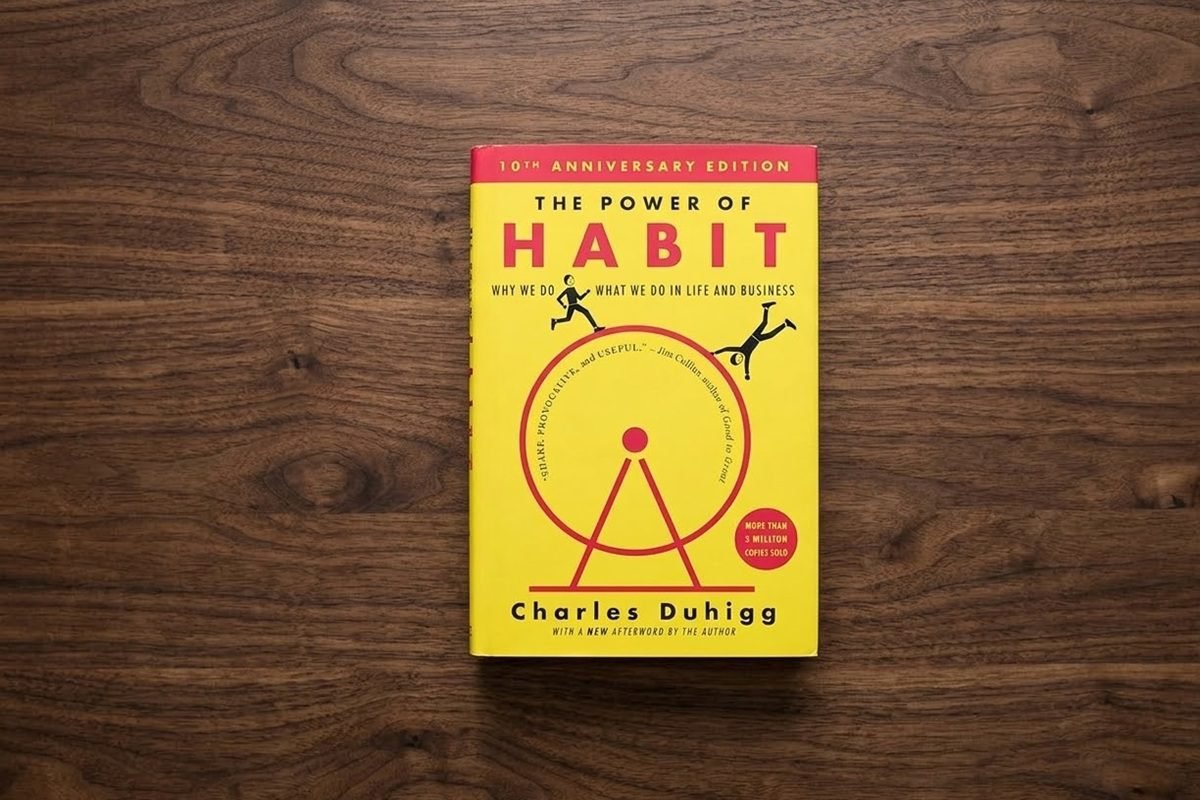
Book review: The Power of Habit
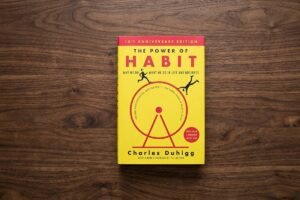
Why We Do What We Do in Life and Business
By Charles Duhigg
Genres:
- Self-Improvement
- Social Psychology
The year it was published:
2012
Number of pages:
400

As an Amazon Associate, I earn from qualifying purchases.
Table of contents:
Prologue: The Habit Cure
Part I – The Habits of Individuals
Chapter 1: The Habit Loop — How Habits Work
Chapter 2: The Craving Brain — How to Create New Habits
Chapter 3: The Golden Rule of Habit Change — Why Transformation Occurs
Part II – The Habits of Individuals
Chapter 4: Keystone Habits, or the Ballad of Paul O’Neill — Which Habits Matter Most
Chapter 5: Starbucks and the Habit of Success — When Willpower Becomes Automatic
Chapter 6: The Power of a Crisis — How Leaders Create Habits Through Accident and Design
Chapter 7: How Target Knows What You Want Before You Do — When Companies Predict (and Manipulate) Habits
Part III – The Habits of Societies
Chapter 8: Saddleback Church and the Montgomery Bus Boycott — How Movements Happen
Chapter 9: The Neurology of Free Will — Are We Responsible for Our Habits?
Thoughts about the book:
In The Power of Habit, Charles Duhigg argues that much of human behavior is governed by habits operating through a simple loop, cue, routine, reward. Duhigg expands this idea across the following three domains, individual habits, organizational habits, and societal habits, showing how the same underlying mechanism can explain everything from personal productivity struggles to corporate efficiency and even social movements. What I liked most about the book is its storytelling approach to science. Duhigg uses a wide range of case studies, for example, a man transforming his life through habit change, companies like Starbucks and Alcoa reshaping internal culture, and large-scale movements like the civil rights movement gaining momentum through habitual patterns of behavior. These stories make abstract psychological concepts tangible and memorable. The writing style is clear, journalistic, and highly readable. I also liked how Duhigg explains scientific studies in a way that feels natural rather than technical. The book is informative and full of scientific research, particularly in neuroscience, behavioral psychology, and organizational studies. However, it is not scientific in a strict academic sense. The author does a great job of giving the reader a framework for understanding their own behavior while also offering practical pathways for change.
Who should read this book:
If you are trying to understand why you do what you do and why changing even one small behavior can feel so difficult, then The Power of Habit by Charles Duhigg is a book that speaks directly to that curiosity. This is a book for readers who are searching for control over behavior. It appeals to those interested in psychology, self-improvement, productivity, health, and organizational performance, but who suspect that willpower alone is not enough to create lasting change. It is especially relevant if you’ve ever tried to build a habit or break one and found yourself repeating the same patterns despite strong intentions. Duhigg is searching for the hidden structure behind human behavior. His interest lies in the “habit loop,” which is the cue, routine, and reward cycle that quietly governs much of what we do each day. He explores how habits are formed in individuals, embedded in organizations, and even reinforced in societies, showing that much of human behavior runs on autopilot rather than conscious decision-making. What this book will help you do is see behavior as something that can be understood and redesigned. It provides a framework for identifying triggers, replacing routines, and preserving rewards in a way that makes change more systematic and less dependent on motivation. Through compelling stories from individuals transforming their lives to companies reshaping culture, Duhigg demonstrates that habits are not destiny, but patterns that can be rewritten. The Power of Habit is for anyone who wants not just to understand behavior, but to change it, whether in themselves, their teams, or their organizations.
Summary of the book:
Prologue: The Habit Cure
The book opens with the story of Lisa Allen, a woman who had spent much of her adult life struggling with smoking, obesity, and debt. When she first met researchers, she appeared transformed, healthy, fit, financially stable, and sober. The surprising question was how such a dramatic change could happen in only a few years. The explanation, as Charles Duhigg shows, is that she didn’t try to fix everything at once. Instead, she focused on one keystone habit, quitting smoking. That single decision set off a chain reaction. To cope, she began jogging. Jogging led her to eat differently, sleep better, and become more disciplined with money. Over time, these connected changes reshaped nearly every part of her life. The prologue uses her story to introduce the central idea of the book, that is, habits are the invisible architecture of daily life. A large portion of what people do, more than 40% by some estimates, is not the result of conscious decision-making but habit. The important implication is that if habits can be understood, they can also be changed. Duhigg structures the book around three levels of habit, individual habits, organizational habits, and societal habits. Each section explores how patterns of behavior form, how they persist, and how they can be deliberately reshaped. A second example reinforces this idea at scale. In Iraq, a U.S. Army major studying unrest in Kufa noticed that riots followed a predictable pattern: crowds would gather, vendors would arrive, boredom would set in, and eventually violence would erupt. Instead of confronting the crowd directly, he changed a small environmental factor he asked the mayor to remove food vendors from the square. Without food, people dispersed earlier, and the riots stopped. By interrupting one part of the routine, he disrupted the entire pattern. Together, these stories introduce the book’s core message, habits operate like loops that shape behavior, but once those loops are understood, they can be redirected. That understanding gives individuals and organizations both a way to diagnose behavior and a way to change it.
Chapter 1: The Habit Loop — How Habits Work
This chapter introduces what the author describes as the most important idea in the book, the habit loop. Every habit, whether helpful or harmful, follows the same basic pattern made up of three parts. First, there is a cue, which is a trigger that tells the brain to start a behavior. Then comes the routine, which is the behavior itself. Finally, there is a reward, which is something positive that tells the brain the behavior is worth repeating. To explain how this works in practice, the chapter draws on research from MIT scientists who studied rats running through a maze. At first, the rats had to actively figure things out as they moved through the maze, and brain scans showed a lot of activity as they sniffed, explored, and made decisions at each turn. But after repeating the maze many times, their behavior changed. The rats began to run through it automatically, and their brain activity dropped significantly. Instead of thinking through each step, their brains essentially went quiet until they reached the reward of chocolate. Over time, the entire process had become a single automatic routine triggered by the cue of entering the maze, followed by the routine of running it, and ending with the reward. Even when researchers changed the location of the chocolate, the rats still followed the same path, sometimes even running into walls, showing how strongly habits take over once they are formed. This idea is connected to a part of the brain called the basal ganglia, which is responsible for storing habitual behaviors. As a behavior becomes a habit, the brain becomes more efficient and uses less energy, almost as if it is switching to autopilot. This is why familiar actions, like driving the same route every day, no longer require conscious thought. The brain groups the steps together into one automatic sequence triggered by a single cue, such as getting into the car. The chapter also emphasizes why habits are so difficult to break. They are never completely erased from the brain. Instead, they remain stored and can be reactivated when the right cue appears. This is why someone who quit smoking years ago might still feel the urge in moments of stress, even if they have not acted on the habit in a long time. A powerful example of this comes from the case of Eugene Pauly, a man who suffered severe brain damage from a viral infection that destroyed his ability to form new conscious memories. He could not remember recent events, recognize people consistently, or describe his own home. Yet despite this, he continued to function through his habits. Each day, he would get up, put on his shoes, and go for a walk along the same route, eventually finding his way back home without difficulty. He could not explain how he did it, and when asked to draw his house, he was unable to, but he would still move through familiar spaces like his kitchen and locate things such as a jar of nuts without hesitation. His basal ganglia remained intact, meaning his learned habits still worked even though his conscious memory did not. His daily routines were still triggered automatically by familiar cues in his environment. Together, these examples show that habits operate beneath conscious awareness, shaped by a loop of cue, routine, and reward. Once formed, they become deeply embedded in the brain, continuing to guide behavior even when memory or conscious thought is no longer involved.
Chapter 2: The Craving Brain — How to Create New Habits
Chapter 2 explains that the real force behind habits is craving. A habit does not become automatic simply because there is a cue and a reward. The brain also has to begin anticipating the reward and craving it before the habit truly sticks. Once that craving develops, the cue alone can trigger a strong desire to perform the behavior. The chapter connects this idea to Ivan Pavlov’s famous experiments with dogs. After repeatedly hearing a bell before being fed, the dogs eventually began salivating as soon as they heard the bell, even before the food appeared. Their brains had learned to associate the cue with the reward so strongly that the expectation itself produced a physical reaction. According to the author, this same process drives many everyday habits. The brain learns to crave the feeling connected to the reward, and eventually the cue alone becomes enough to spark the routine. To show how this works in the real world, the chapter examines how companies intentionally create cravings to turn products into habits. One of the clearest examples is the story of Claude Hopkins and Pepsodent toothpaste in the early 1900s. At the time, most Americans did not brush their teeth regularly because there was no established habit around it. Hopkins needed to create one from scratch. While researching dental care, he discovered the idea of “tooth film,” the fuzzy coating people could feel on their teeth. He turned this into a cue by encouraging people to notice the film whenever they ran their tongue across their teeth. The reward he promised was beauty and an attractive smile, but the most important element was something else entirely, the tingling sensation left behind by the toothpaste. Ingredients like mint oil and citric acid created a fresh, clean feeling that people quickly began to crave. Over time, brushing stopped being just a chore connected to hygiene and became something people wanted because they enjoyed the sensation afterward. If they skipped brushing, their mouths no longer felt “right.” Within a decade, toothbrushing had become a daily habit for millions of Americans. The same principle appeared decades later in the story of Procter & Gamble’s launch of Febreze. The company originally believed consumers would use the spray to eliminate unpleasant smells in their homes, but sales were disappointing. Researchers discovered that people living with strong odors, such as cigarette smoke or pet smells, had become so used to them that they no longer noticed them. Without noticing a bad smell, there was no cue reminding them to use the product. The company changed its strategy after observing how some people actually used Febreze. One woman sprayed it on her freshly made bed after cleaning because she enjoyed the pleasant scent as a finishing touch. P&G realized the product worked better when connected to an existing routine and reward rather than a problem people no longer noticed. They repositioned Febreze as part of the satisfaction of having a clean home and strengthened the fragrance to make the reward more noticeable. Instead of focusing on odor removal, they focused on the pleasurable feeling of freshness people craved after cleaning. Once the product became linked to that emotional reward, sales rapidly increased, and Febreze became enormously successful. The chapter also explores the science behind craving through experiments conducted by neuroscientist Wolfram Schultz. In one study, a monkey named Julio learned that a specific shape appearing on a screen meant he would receive blackberry juice after pressing a lever. At first, Julio’s brain reacted only when the juice arrived. But after repeating the experiment many times, researchers noticed that his brain began releasing dopamine as soon as the shape appeared, before the reward arrived. The cue itself had become exciting because the monkey had learned to expect the reward. When the juice was delayed or weakened, Julio became frustrated and agitated because the craving had already been triggered. The same process happens in human habits and addictions. The brain starts reacting to the cue as though the reward is already on its way, creating a powerful urge to complete the routine. Together, these examples show that habits become powerful not simply because rewards exist, but because the brain learns to crave them. Once a craving is attached to a cue, the habit loop becomes much stronger, making behaviors feel automatic and difficult to resist.
Chapter 3: The Golden Rule of Habit Change — Why Transformation Occurs
Chapter 3 introduces what Charles Duhigg calls the “Golden Rule of Habit Change,” which says that habits cannot be erased, only changed. The cue and reward usually stay the same, but the routine in the middle can be replaced with a new behavior. The old habit remains stored in the brain, which is why bad habits are difficult to completely eliminate, but new routines can eventually become stronger through repetition. The chapter shows this idea through several examples. When Tony Dungy became the coach of the Tampa Bay Buccaneers, he focused on changing players’ automatic reactions instead of teaching complicated strategies. He trained them to respond to specific cues on the field with practiced routines until the behaviors became instinctive. The rewards stayed the same, but the routines improved. Over time, the team transformed from one of the worst in the NFL into a playoff contender. A similar process appears in Alcoholics Anonymous. Researchers found that AA helps people identify the cues that trigger drinking, such as stress or loneliness, and the rewards they seek, like comfort or escape. Instead of alcohol, members replace the routine with healthier alternatives such as meetings, sponsors, and support from others. The chapter emphasizes that the real strength of AA comes from belief. Seeing others successfully change helps people believe they can change too. The same principle is shown through Mandy, a woman who struggled with chronic nail-biting. Her therapist helped her identify the cue and the reward, which was a sense of relief and stimulation. Instead of biting her nails, she practiced new routines like gripping objects or tapping surfaces whenever the urge appeared. By keeping the same reward but changing the behavior, she gradually broke the habit. Together, these examples show that lasting habit change happens by understanding the cue and reward behind a behavior, replacing the routine with a better one, and developing a belief that change is possible.
Chapter 4: Keystone Habits, or the Ballad of Paul O’Neill — Which Habits Matter Most
Chapter 4 explains that some habits are more powerful than others. These are called keystone habits, which are habits that create positive chain reactions and lead to improvements in many other areas of life or work. Instead of trying to change everything at once, the author argues that focusing on one important habit can naturally trigger broader transformation. Keystone habits also create “small wins,” which build confidence and momentum for bigger changes. One example is Paul O’Neill, who became CEO of Alcoa in 1987. Instead of focusing on profits, he made worker safety his top priority and aimed for zero workplace injuries. At first, investors thought this decision made no sense, but improving safety forced the company to rethink how it operated. Managers had to communicate better, track problems more carefully, involve workers in decision-making, and improve efficiency across departments. Safety became the keystone habit that transformed the entire company. By the time O’Neill retired, Alcoa’s profits had increased dramatically, and its safety record was among the best in the industry. The chapter also describes research on weight loss where participants were simply asked to keep a food journal. Those who regularly wrote down what they ate lost far more weight than those who did not. The journal worked as a keystone habit because it increased awareness of eating patterns and encouraged healthier decisions in other areas. People began noticing unhealthy routines and naturally started making better choices, such as planning meals or replacing snacks with healthier options. Together, these examples show that lasting change often begins with one small but influential habit that creates momentum and makes other positive behaviors easier to develop.
Chapter 5: Starbucks and the Habit of Success — When Willpower Becomes Automatic
Chapter 5 focuses on willpower, which the author describes as one of the most important habits for success. Research shows that willpower is a stronger predictor of achievement than intelligence, but it is not something people are simply born with. Instead, willpower works like a muscle, it can be strengthened through practice, but it can also become exhausted when overused. The chapter argues that people are most successful at managing difficult situations when they prepare routines and plans in advance. This idea is illustrated through the story of Travis Leach, a Starbucks employee who struggled with self-control and emotional regulation for most of his life. After growing up in a chaotic household and repeatedly losing jobs, he joined Starbucks and was introduced to structured training programs designed to build habits of discipline and emotional control. Employees were taught specific routines for handling stressful situations, such as the “LATTE” method for dealing with angry customers. They also practiced writing detailed plans for difficult moments, so they would know exactly how to respond under pressure. Over time, these routines became automatic, and Travis eventually became a successful manager overseeing multiple stores. Starbucks succeeded not by telling employees to “try harder,” but by helping them build habits that made willpower easier to use. The chapter also explores how willpower can become depleted through psychologist Mark Muraven’s famous “radish and cookie” experiment. Hungry students were placed in front of cookies and radishes. Some were allowed to eat the cookies, while others had to resist them and eat only radishes. Afterward, all participants attempted an impossible puzzle. The students who had already used willpower to resist the cookies gave up much faster than those who had not. The experiment showed that self-control is a limited resource that becomes weaker when overused. A similar lesson appears in a study of elderly surgery patients recovering from painful hip and knee operations. Researchers found that patients who created detailed plans for difficult moments during rehabilitation recovered much faster than those who did not. Instead of setting vague goals, they planned exactly when they would walk, how they would handle pain, and what actions they would take when they felt discouraged. These small, specific routines helped patients push through painful moments without relying entirely on motivation in the moment. Together, these examples show that willpower is not simply about determination. It becomes stronger when people develop routines and prepare responses ahead of time, allowing good decisions to become automatic even during stressful or difficult situations.
Chapter 6: The Power of a Crisis — How Leaders Create Habits Through Accident and Design
Chapter 6 explores how habits shape organizations in the same way they shape individuals. Inside companies and institutions, routines develop over time and often create an “unstable truce” between different groups. These habits are not always designed intentionally, many emerge from conflict, fear, and informal compromises. Most of the time, they keep the organization functioning, but under pressure, they can break down and lead to serious failures. The chapter argues that crises, while damaging, can also create rare opportunities to rebuild organizational habits in a better way. This idea is illustrated through the case of Rhode Island Hospital, where a toxic culture existed between surgeons and nurses. Doctors often treated nurses dismissively, so nurses developed informal systems to protect patients, such as warning each other about difficult surgeons and double-checking procedures quietly behind the scenes. These habits kept the hospital running, but they relied on fear and accommodation rather than open communication. The system eventually failed when a nurse questioned whether the correct side of a patient’s brain was marked for surgery. The surgeon ignored the concern and operated on the wrong side of the man’s head. The patient later died. The tragedy showed how fragile organizational habits become when people are afraid to challenge authority and when safety routines are built informally instead of deliberately. The chapter also discusses research by economists Richard Nelson and Sidney Winter, who argued that organizations rely heavily on routines rather than constant rational decision-making. These routines help manage tensions between departments and prevent chaos by creating predictable patterns of behavior. For example, regular meetings and shared procedures help different groups cooperate even when their interests conflict. According to the authors, successful organizations are the ones that consciously design healthy routines instead of allowing harmful habits to develop naturally through conflict and fear. Together, these examples show that organizational habits strongly influence how companies function, especially during stressful situations. When routines are poorly designed, they can create hidden weaknesses that only become visible during a crisis. However, those same crises can also become opportunities to rebuild stronger systems and healthier patterns of behavior.
Chapter 7: How Target Knows What You Want Before You Do — When Companies Predict (and Manipulate) Habits
Chapter 7 explores how companies study and influence consumer habits using data and psychology. The chapter’s main argument is that people are strongly drawn to familiarity, and businesses can use that tendency to shape behavior, introduce new products, and influence purchasing decisions without consumers fully realizing it. One major example is Target’s pregnancy prediction algorithm. By analyzing shopping data from women who had signed up for baby registries, Target’s statisticians discovered patterns that often signaled pregnancy, such as buying unscented lotion, supplements, and cotton balls during certain stages. The company became so accurate at predicting pregnancies that it sometimes identified women as pregnant before their own families knew. When customers realized how much the company could infer from their shopping habits, many found it unsettling. To avoid appearing intrusive, Target began hiding baby-related advertisements among unrelated coupons and products. By blending the unfamiliar with ordinary, familiar items, the company made its marketing feel natural rather than invasive. The chapter also illustrates the power of familiarity through the success of OutKast’s song “Hey Ya!” Although industry analysts predicted the song would become a huge hit, listeners initially changed radio stations when it played because it sounded too different from what they were used to hearing. Radio DJs solved the problem by placing the song between popular, familiar tracks from well-known artists. Surrounded by music listeners already liked, “Hey Ya!” gradually began to feel familiar too, and it eventually became a massive success. Together, these examples show that habits influence not only what people do, but also what they enjoy, trust, and accept. Companies that understand this can successfully introduce new ideas or products by connecting them to patterns and experiences that already feel comfortable and familiar.
Chapter 8: Saddleback Church and the Montgomery Bus Boycott — How Movements Happen
Chapter 8 explores how habits shape social movements and communities. The author argues that large-scale change happens through shared social habits and usually follows three stages, movements begin through strong personal relationships, grow through wider community pressure, and become lasting when people develop new habits and identities connected to the movement. The chapter uses the Montgomery Bus Boycott as a major example. Rosa Parks was not the first Black woman arrested for refusing to give up her bus seat, but her arrest sparked action because she had strong connections across many parts of the community. Friends, church members, coworkers, and activists quickly spread news of her arrest, and those personal relationships helped launch the boycott. What turned the boycott into a year-long movement, however, was social pressure from the broader community. Churches and community groups encouraged participation, and refusing to join the boycott became socially difficult because everyone around you expected involvement. Martin Luther King Jr. then helped make the movement sustainable by giving people a new sense of identity and purpose. He encouraged habits of nonviolence, discipline, and moral responsibility, helping participants see themselves as part of something larger than a protest. The same pattern appears in the growth of Saddleback Church under Rick Warren. Warren built the church by understanding people’s existing habits and creating an environment that felt comfortable and familiar. As the church expanded, he organized members into small groups that met regularly in homes, creating strong personal connections between members. These groups strengthened their commitment because people’s faith became tied to their friendships and daily routines. Warren also encouraged members to adopt specific habits such as prayer, Bible study, and charitable giving. Over time, these routines became part of members’ identities, allowing the church community to sustain itself without relying entirely on leadership from the top. Together, these examples show that social movements succeed when they combine personal relationships, community expectations, and shared habits that give people a lasting sense of identity and belonging.
Chapter 9: The Neurology of Free Will — Are We Responsible for Our Habits?
Chapter 9 explores the question of responsibility, if habits are automatic and deeply wired into the brain, how much control do people really have over their actions? Duhigg argues that habits do not remove free will or responsibility. Instead, responsibility begins once a person becomes aware of their habits and understands they can be changed. The chapter compares two very different cases. The first is Brian Thomas, a man who killed his wife while sleepwalking during a severe night terror. Thomas had a long history of acting violently in his sleep, but he had never seriously harmed anyone before. During the incident, he believed he was defending his wife from an attacker and had no conscious awareness of what he was doing. Medical experts agreed that his higher reasoning functions were effectively shut down during the episode, leaving him unable to control his actions. Because he could not have predicted the violence, the court found him not guilty. The second case is Angie Bachmann, a compulsive gambler who lost her inheritance and accumulated massive debt through years of gambling. She argued that her addiction had become automatic and uncontrollable, especially since casinos continued encouraging her behavior with rewards and incentives despite knowing she had a problem. Research showed that compulsive gamblers often experience intense cravings driven by habit loops in the brain. However, unlike Thomas, Bachmann had long been aware of her addiction and its consequences. She had previously declared bankruptcy and had even tried moving away from casinos to stop gambling. The court ruled that because she recognized the problem and understood its impact, she still held responsibility for her actions. Through these stories, the chapter concludes that awareness is the key difference. Habits may operate automatically, but once people recognize the cues, routines, and rewards driving their behavior, they gain the ability to intervene and change. According to Duhigg, understanding habits gives people both the freedom and the responsibility to reshape them.