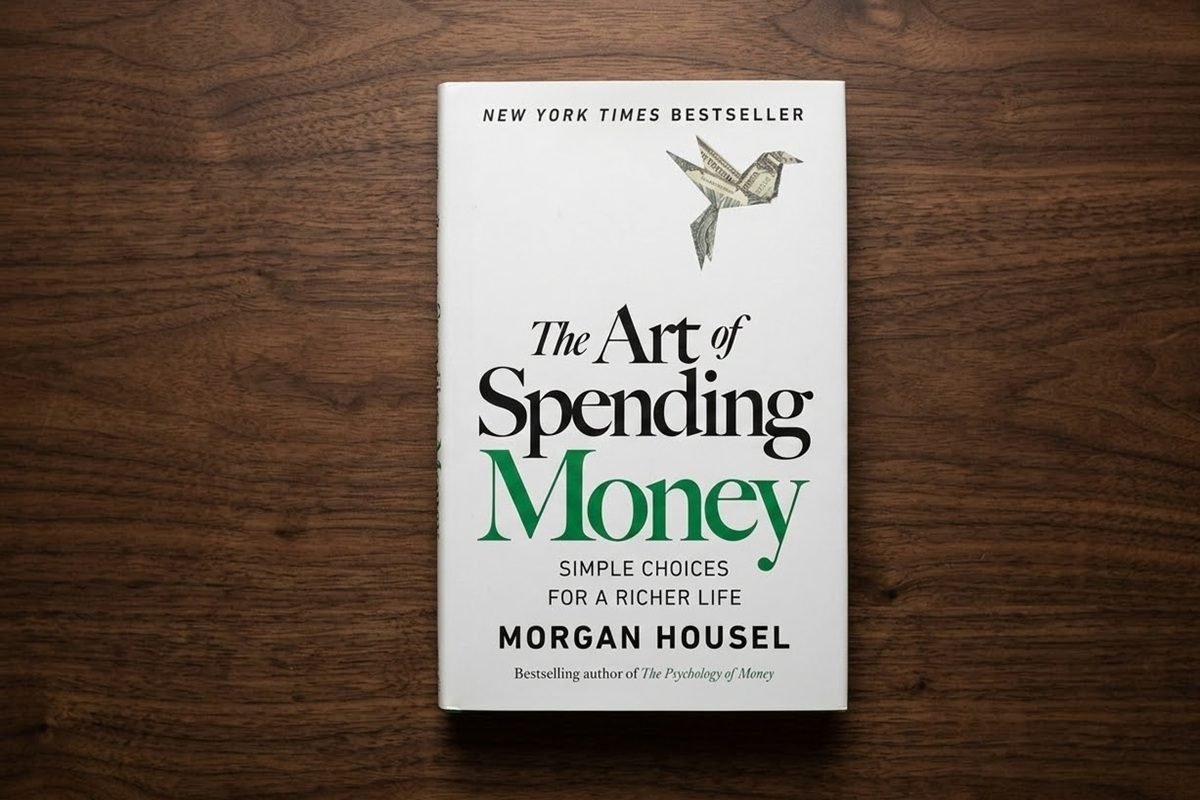
Book review: The Art of Spending Money
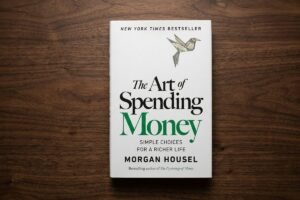
Simple Choices for a Richer Life
By Morgan Housel
Genres:
- Decision-Making
- Money & Investing
The year it was published:
2025
Number of pages:
256

As an Amazon Associate, I earn from qualifying purchases.
Table of contents:
Introduction: The Quest of the Simple Life
Chapter 1: All Behavior Makes Sense with Enough Information
Chapter 2: May I Have Your Attention Please
Chapter 3: The Happiest People I Know
Chapter 4: Everything You Don’t See
Chapter 5: The Most Valuable Financial Asset Is Not Needing to Impress Anyone
Chapter 6: What Makes You Happy
Chapter 7: The Rich and the Wealthy
Chapter 8: Utility vs. Status
Chapter 9: Risk and Regret
Chapter 10: Look at Them
Chapter 11: Wealth Without Independence Is a Unique Form of Poverty
Chapter 12: Social Debt
Chapter 13: Quiet Compounding
Chapter 14: Identity
Chapter 15: Try Something New
Chapter 16: Your Money and Your Kids
Chapter 17: Spreadsheets Don’t Care About Your Feelings
Chapter 18: The Finer Things
Chapter 19: The Life Cycle of Greed and Fear
Chapter 20: How to Be Miserable Spending Your Money
Chapter 21: The Luckier You Are, the Nicer You Should Be
Thoughts about the book:
The Art of Spending Money is a reflective, philosophical, rather than technical book. Where many finance books obsess over accumulation, Housel turns his attention to deployment, how money is used, what it signals, and what it ultimately delivers. Housel’s greatest strength remains his ability to interpret financial decisions as expressions of human emotion. Spending is never just spending. It is identity, insecurity, aspiration, memory, and social comparison woven together. He does not shame consumption, nor does he romanticize frugality. Instead, he asks whether spending aligns with values or with external validation. This focus on autonomy, especially the idea that “not needing to impress anyone” is a financial superpower, is among his sharpest insights. As in his other works, Housel writes in simple, conversational prose. There is no jargon, no dense financial modeling, no academic detours. His sentences are short and direct, yet layered with implication.
For readers new to Housel, The Psychology of Money remains the stronger starting point. For readers already familiar with his philosophy, The Art of Spending Money deepens and personalizes his ideas. It is less about getting rich and more about knowing when you have enough.
Who should read this book:
You should read this book if you’ve ever wondered why earning more doesn’t automatically make life better. If you feel financially “successful” but not fully satisfied, this book will hit home.
Summary of the book:
Introduction: The Quest of the Simple Life
Housel opens by challenging the assumption that more money automatically leads to a better life. The real aspiration, he argues, is the ability to control your time, reduce unnecessary stress, and focus on what truly matters. Money is powerful not because it buys luxury, but because it can buy independence and clarity. The introduction frames spending as a deliberate act that either simplifies or complicates life. The question is not how much you spend, but whether your spending moves you toward freedom. The goal is not accumulation for its own sake, but the reduction of complexity. A simple life is not one without ambition, but one with fewer unnecessary obligations, fewer social pressures, and greater control over time. He suggests that many financial decisions paradoxically make life more complicated, such as larger homes, more prestigious lifestyles, and status-driven upgrades often increase stress rather than reduce it. True financial mastery lies in converting money into autonomy.
Chapter 1: All Behavior Makes Sense with Enough Information
Here, Housel explores the hidden logic behind financial behavior. Every spending pattern is rooted in personal history, like childhood experiences, economic shocks, cultural expectations, and social environment. What appears irrational from the outside may be a rational adaptation to past experiences. Someone who overspends may have grown up deprived, someone excessively frugal may have internalized instability. By understanding context, judgment gives way to empathy. This chapter argues that financial behavior is psychological autobiography.
Chapter 2: May I Have Your Attention Please
Modern markets are engineered to capture attention and convert it into consumption. Housel discusses how advertising, social media, and status signaling distort spending priorities. Attention is finite, yet corporations compete aggressively to monetize it. When attention is fragmented, spending becomes reactive instead of intentional. Protecting focus is, therefore a financial strategy. The battle for your wallet begins with the battle for your mind.
Chapter 3: The Happiest People I Know
Drawing from observation rather than statistics, Housel notes that the happiest individuals tend to value autonomy, relationships, and manageable expectations. They often spend less on appearance and more on flexibility. Their lives are structured to minimize unnecessary financial pressure. Happiness, he implies, emerges from alignment between values and lifestyle. Money enhances happiness when it supports freedom and connection, not comparison.
Chapter 4: Everything You Don’t See
The invisible aspects of wealth, such as savings, low debt, and optionality, matter more than visible consumption. Housel warns against mistaking visible affluence for financial security. The true engine of resilience is often hidden. Spending that prioritizes what others see frequently undermines what truly protects you. This chapter reinforces the theme that financial strength is quiet.
Chapter 5: The Most Valuable Financial Asset Is Not Needing to Impress Anyone
Housel dives deeply into social comparison as a financial hazard. The desire to impress creates endless escalation, because status is relative and always shifting. Escaping the need to signal success dramatically reduces financial strain. When you no longer measure yourself by others’ perceptions, your spending naturally simplifies. Independence from validation becomes a form of compound interest for peace of mind.
Chapter 6: What Makes You Happy
This chapter emphasizes introspection. Many people adopt spending habits inherited from culture or peers without questioning whether they personally derive joy from them. Housel encourages experimentation and reflection to determine which expenses generate genuine satisfaction. Happiness is highly individualized, and discovering it requires awareness rather than imitation.
Chapter 7: The Rich and the Wealthy
Housel carefully distinguishes visible income from invisible assets. The rich display lifestyle, the wealthy maintain optionality. Wealth represents stored flexibility, the ability to say no, to pivot, to endure downturns. Richness can be fleeting and fragile. This distinction challenges readers to redefine success in long-term rather than immediate terms.
Chapter 8: Utility vs. Status
Spending motivated by utility provides a direct functional benefit. Spending motivated by status depends on social acknowledgment. Housel explains that utility compounds privately, while status requires constant reinforcement. The emotional return on utility-based spending tends to be steadier and more durable. Status-based spending, by contrast, often breeds anxiety.
Chapter 9: Risk and Regret
Financial decisions are shaped not only by potential outcomes but by anticipated regret. People fear missing opportunities as much as they fear losses. Housel suggests that understanding personal regret tolerance is key to sustainable decision-making. A choice that aligns with your emotional comfort may outperform one that merely maximizes theoretical return.
Chapter 10: Look at Them
Comparison fuels dissatisfaction. Observing others’ spending habits without seeing their full financial picture creates distorted benchmarks. Housel highlights the danger of comparing your behind-the-scenes finances with someone else’s curated public image. Social visibility exaggerates consumption norms.
Chapter 11: Wealth Without Independence Is a Unique Form of Poverty
Accumulating money without gaining autonomy defeats the purpose of wealth. Housel argues that independence, the ability to control your time and decisions, is the highest financial goal. Without it, even large fortunes can feel restrictive.
Chapter 12: Social Debt
Social obligations often influence spending more than necessity. Weddings, gifts, and lifestyle norms create invisible pressures. Housel suggests that understanding these forces helps prevent unconscious financial commitments driven by expectation rather than desire.
Chapter 13: Quiet Compounding
Small, consistent financial decisions accumulate quietly over time. The power of compounding applies not only to investments but to habits and lifestyle choices. Subtle restraint today can yield disproportionate freedom tomorrow. Money is a very personal matter, and it’s impossible to talk about it and not feel embarrassed or influenced by other people’s opinions. Don’t perform for others and don’t copy their strategies. Your financial strategy should be quiet and personal, not loud and performative.
Chapter 14: Identity
Spending choices reflect self-concept. Purchases can reinforce or distort identity. When spending aligns with authentic identity, satisfaction increases. When it compensates for insecurity, dissatisfaction persists. Financial clarity begins with identity clarity.
Chapter 15: Try Something New
Housel advocates measured experimentation. Experiences often deliver deeper returns than material upgrades. Trying new paths, hobbies, or locations can reshape perspective and priorities. Flexibility, not rigidity, supports growth.
Chapter 16: Your Money and Your Kids
Children learn financial behavior through observation. Housel emphasizes modeling moderation, gratitude, and independence. Teaching money principles requires demonstrating balanced decision-making rather than preaching rules.
Chapter 17: Spreadsheets Don’t Care About Your Feelings
Pure optimization ignores psychology. Housel argues that financial plans must account for emotional sustainability. A theoretically perfect plan that creates anxiety will not last. Endurance beats precision.
Chapter 18: The Finer Things
Luxury is subjective and contextual. Housel reframes refinement as intentional enjoyment rather than extravagance. The “finer things” often involve quality, time, and presence rather than price tags.
Chapter 19: The Life Cycle of Greed and Fear
Greed expands spending and risk-taking while fear contracts both. These emotional cycles shape markets and personal finances alike. Recognizing these patterns reduces impulsive swings.
Chapter 20: How to Be Miserable Spending Your Money
Housel outlines the behaviors that undermine satisfaction, and that is constant comparison, debt-fueled consumption, chasing trends, and ignoring values. Misery often stems from misalignment rather than scarcity.
Chapter 21: The Luckier You Are, the Nicer You Should Be
The closing chapter emphasizes humility. Luck plays a significant role in financial outcomes. Recognizing this fosters generosity and perspective. Gratitude transforms wealth from entitlement into responsibility.